Buying hairdressing scissors: comparing size, handle, and use
Von Hassieb Kalla · Dr.Kalla RedaktionShare
Hairdressing scissors should suit your hand and your way of working. A well-known material or a high price alone does not indicate whether you will be able to work well with them. Before purchasing, make a note of whether you mainly want to do basic cuts, contours, or texturizing. In our selection of combs and scissors, you can then specifically search for the appropriate type of tool.
Hair cutting scissors or thinning scissors?
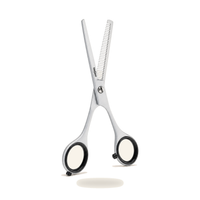
For shortening and shaping, first compare classic hair cutting scissors. Toothed thinning scissors perform a different task: they do not remove the entire section of hair captured when closed and are used for thinning or texturizing. They are therefore not a direct replacement for your normal cutting scissors. How much hair they actually capture depends on the specific model and the application. Choose them based on the desired technique, not just the number on the packaging.
Assess size and handle together
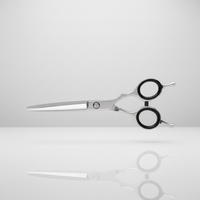
Inch specifications help with size comparison, but do not automatically describe the length of the cutting edge. Check which measurement the manufacturer specifies. The Iwasaki Master Offset 5.5 inch is a concrete model for comparison. In addition, pay attention to the arrangement of the finger rings, a suitable finger rest, and the intended hand. An offset design has staggered handles; whether this suits you cannot be decided by the product photo alone.
Prioritize technique over buzzwords
Place two or three models side by side and compare the same details: size, handle position, cutting type, and adjustment options. Terms like "professional" or "premium" do not replace this information. Furthermore, a fixed service life cannot be derived from a steel designation. For special techniques like slicing, suitability should be expressly stated in the manufacturer's specifications. If a piece of crucial information is missing, clarify it before ordering instead of assuming it based on a similar-looking model.
Consider care and maintenance at the time of purchase
Also plan for safe storage and the care specified by the manufacturer. Hair and residue must be removed regularly; tools, maintenance oil, and cleaning agents must be suitable for the scissors. The screw should not be adjusted as a precaution. Check the movement according to the respective instructions and have persistent pulling or pushing professionally assessed. Cleaning, disinfection, and sharpening are different tasks. Adhere to manufacturer instructions and your salon's hygiene plan.
Your short shopping list
- Determine the task: cutting or targeted thinning and texturizing.
- Check size, handle, and version for the correct hand.
- Compare suitability for your cutting technique and care instructions.
- Clarify unclear measurements before purchase instead of deciding solely based on the photo.
Now compare the scissors in the range using your shopping list. Start with the required tool type and open the product details for size and version. This allows you to purchase more purposefully rather than ordering several similar models without a clear intended use.